An enquiry that reads "ceramic ball valve, DN50, zirconia" will come back with quotes that cannot be compared. One supplier offers a composite ceramic body rated to 120 degrees, another a solid zirconia ball in a lined metal shell, a third something with an unspecified seat. The price spread looks like a market; it is really a specification gap. This page lists the six fields that make a ceramic valve enquiry answerable, in the order they change the design, plus a block you can copy into your next RFQ. The hardware itself is catalogued on the CRAC ceramic valves page.
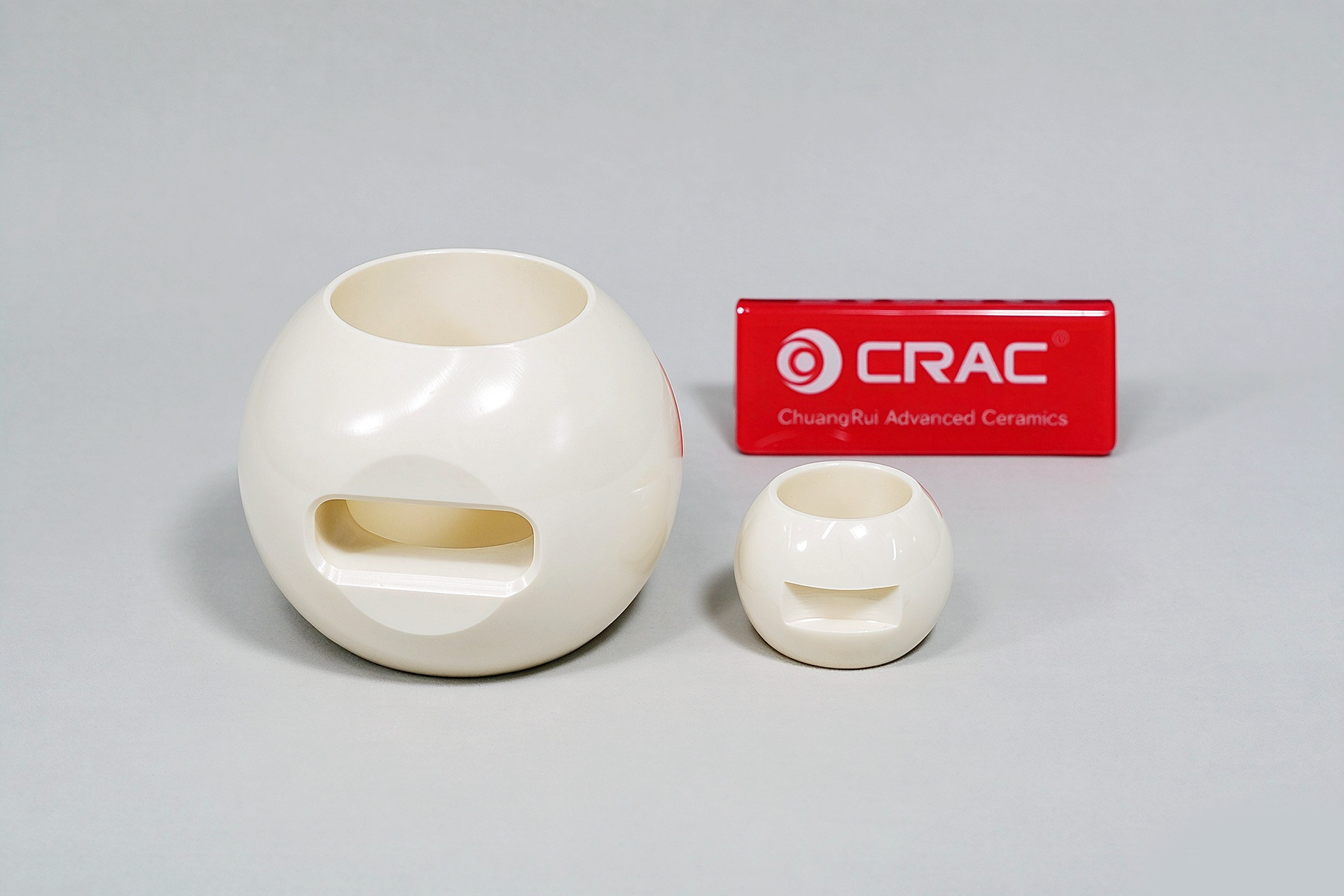
Field 1: The Medium, Written as a List
Not "chemical duty" — the actual composition, concentration and temperature of every fluid the valve will see, including the cleaning agent and the occasional upset stream. Ceramic is not universally inert, and the exceptions are specific enough to matter. Composite ceramic bodies handle acids, alkalis, alcohols and aromatic solvents such as benzene well, but ketones and epoxy thinners attack the infiltrated grain boundary, and a valve specified for "solvent service" without naming the solvent can fail in weeks. Solid zirconia and silicon nitride cover a different envelope again.
Add the solids: concentration, particle size and shape. A clear liquid and a 30 percent slurry of angular particles are two different valves even at the same DN and pressure — the slurry case is where ceramic earns its price, and the mechanism is described under ceramic valves in abrasive slurries.
Field 2: Pressure, Temperature, and the Number People Forget
Give the design pressure, the operating pressure and the temperature range — including steam-out or CIP temperature, which is the figure that quietly exceeds the material limit. This is where the composite and solid-ceramic families part company: composite ceramic bodies are rated to about 120 degrees, while the zirconia grades carry far higher strength and temperature capability. State the maximum temperature the body will ever see, not the normal process temperature, and the material choice stops being a guess.
Field 3: Port Geometry — O-Type, U-Type, and What the Ball Does
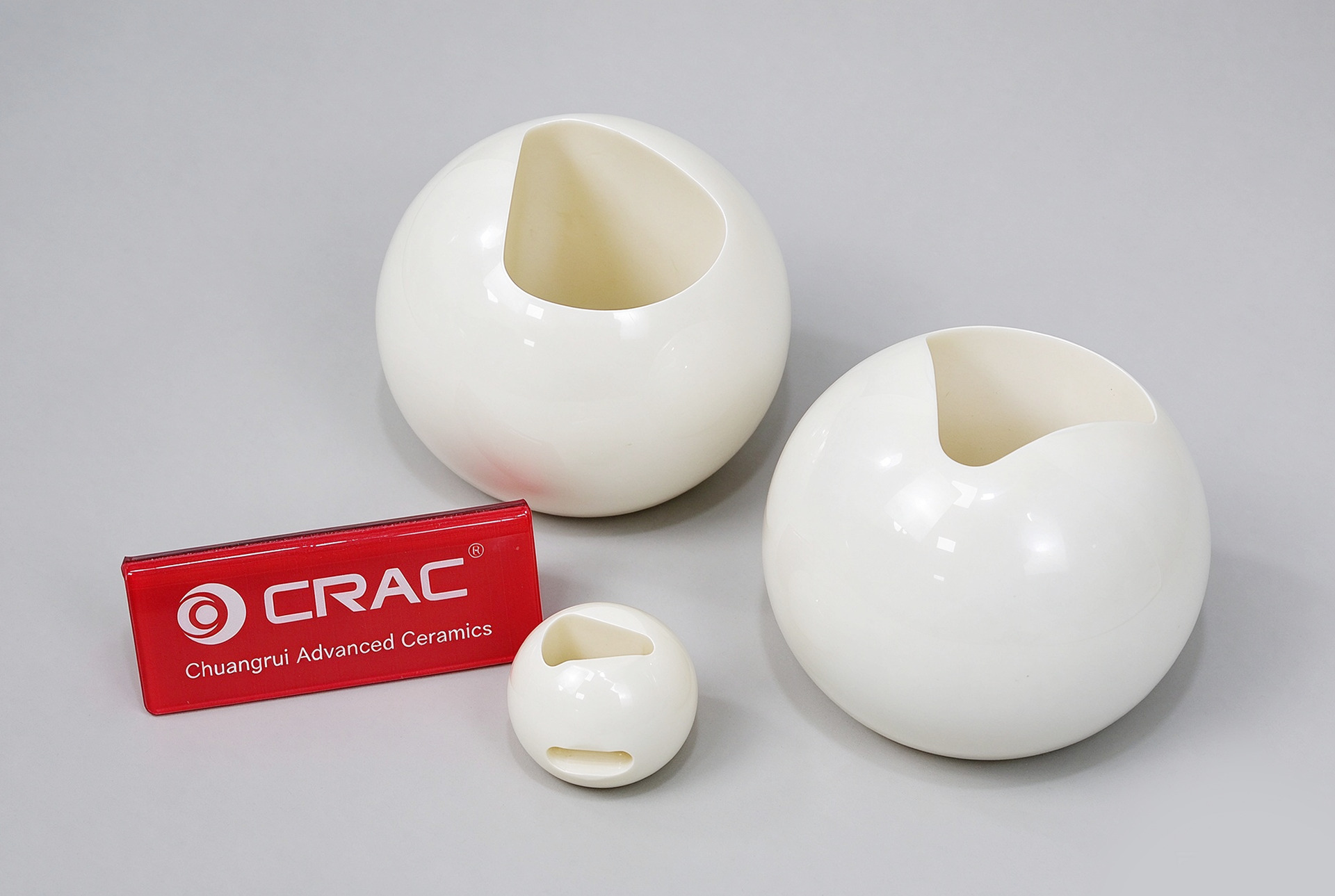
The ball's passage shape decides both flow and behaviour on solids. An O-type ball gives a straight, unobstructed bore with the lowest pressure loss and the cleanest passage for slurry; it is the default for high-flow and abrasive duties, and you can see the form on the O-type ceramic ball valve page. A U-type ball presents a shaped passage that improves control characteristics and draining in some orientations, and it suits duties where the valve is asked to do more than open and shut — described on the U-type page. Specify which, plus full bore or reduced bore, or the supplier will choose for you.
Field 4: Torque — A Design Output, Not a Footnote
Actuator sizing is where ceramic valve projects most often go wrong, because ceramic sealing surfaces are stiff and the breakaway torque is higher than the metal valve the actuator was sized against. Put a torque figure in the enquiry and require the supplier to confirm it at the specified pressure: for reference, a DN65 composite ceramic valve core is quoted above 200 newton-metres. If the actuator is already bought, state its output and let the valve be matched to it rather than discovering the mismatch on site.
Field 5: Connections, Face-to-Face and the Retrofit Question
Flange standard and drilling, wafer or lugged pattern, face-to-face length, and the pipe class on both sides. Retrofits add one more: the space available, because a ceramic body is often thicker than the metal valve it replaces. Send a photo of the installed valve alongside the drawing — it resolves more ambiguity than a paragraph of text. Trim items that wear with the seat — stem, packing, accessories — are listed separately under ceramic valve accessories, so the spares scope can be quoted at the same time.
Field 6: Acceptance — Say How It Will Be Proven
The last field protects you after delivery. Ask for a hydrostatic shell test and a seat leak test at stated pressures, a torque measurement at the specified differential, dimensional report against the drawing, and a material certificate naming the grade. If your plant works to a particular standard, name it in the enquiry; the supplier should confirm compliance rather than assume it. The test regime used for precision zirconia valve components is set out in technical specifications and testing standards, which makes a useful reference point for what to demand.
A Block You Can Paste Into the Enquiry
| Field |
What to state |
Why it changes the quote |
| Medium | Composition, concentration, solids content, cleaning agent | Selects ceramic family; rules out incompatible chemistry |
| Pressure / temperature | Design and operating pressure; max temperature incl. steam-out | Sets wall section, rating and material class |
| Size and port | DN, O-type or U-type, full or reduced bore | Determines bore, Cv, and the ball tooling |
| Torque / actuation | Breakaway torque at pressure, or actuator output available | Prevents undersized actuators and site rework |
| Connections | Flange standard, face-to-face, pipe class, available space | Sets the body casting/molding and the retrofit fit |
| Acceptance | Test standard, pressures, torque check, certificates | Defines price of testing and the documentation pack |
Where Ceramic Is the Wrong Answer
Honesty is worth more than a catalogue here. Three cases should send you back to metal: a fluid that attacks the ceramic's grain boundary — ketones and epoxy thinners are the recurring examples for composite bodies; a body temperature above the grade's rating, where a polymer-infiltrated composite is simply out of its range; and a line with severe water hammer or mechanical impact, where a brittle body needs the piping redesigned before the valve is changed. In every other abrasive or corrosive duty, the case for ceramic is strong and long established, as summarised for chemical processing.
For volumes or non-standard geometry, the body and ball can be molded to the drawing rather than selected from a range — the OEM/ODM program covers that route, including grade choice between the yellow zirconia and silicon nitride families where their properties suit the duty better than white zirconia.
Three Questions Buyers Ask Late
Can we keep our existing actuator?
Usually yes, if the actuator has margin over the ceramic valve's breakaway torque at pressure. Send its output figure with the enquiry and the valve can be matched instead of the other way round.
Does a ceramic ball valve need a different installation procedure?
It needs a cleaner one — no hammering, no levering against the body, flange bolts torqued in sequence to the stated figure. Most early damage happens during fitting, not in service.
What is the typical lead time for a non-standard size?
It depends on whether new tooling is required; a size inside existing tooling is far quicker than one that needs a mold. Say the size and we will confirm which case applies before you commit.
Send the six fields and we will come back with a comparable quote.