Coarse particles in the fine product bin. That is how most classifier wheel problems announce themselves — not as a machine fault, but as a quality complaint that travels upstream from the customer. Because the wheel sits at the heart of the air classifier and fixes the separation size through its blade geometry and speed, almost every classification symptom traces back to something happening at the wheel. This page walks through the four faults we are asked about most, what each one looks like on the floor, and what to check before ordering a replacement. Current wheel designs are listed on the CRAC ceramic classifier wheels page.
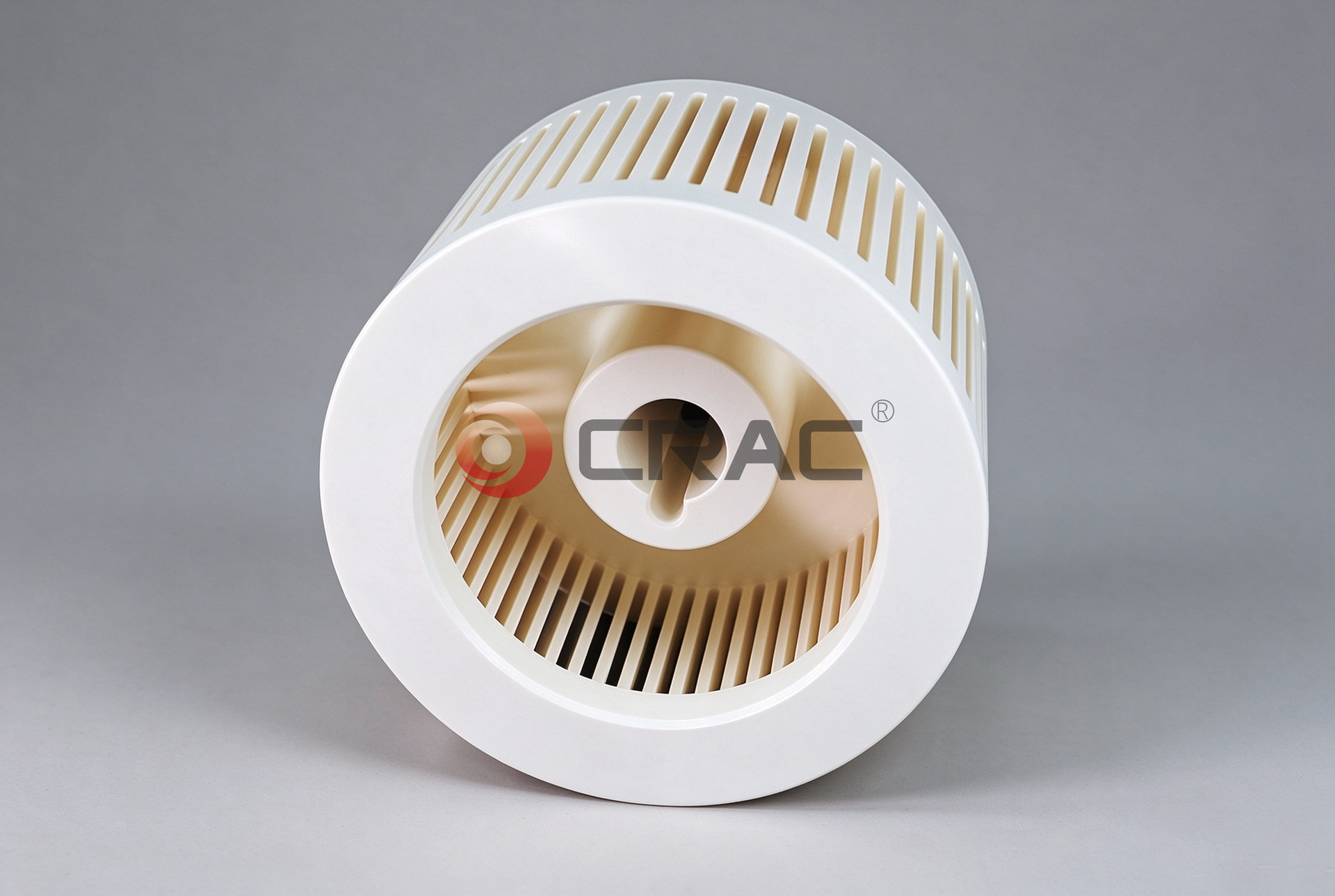
Symptom 1: Coarse Particles in the Fine Product
What you see: the top size of the product creeps up, or individual oversize grains appear in spot checks, while the classifier speed and feed rate have not changed.
Check first: the feed. A surge of coarser feed than usual can overload the air stream and push oversize past the wheel even when the wheel is healthy. Compare the mill discharge size against the product size — if the mill itself is producing coarse material, the wheel is innocent.
Then check the wheel: pull the rotor and inspect the blade edges under a loupe. On a metal wheel in an abrasive powder, edges erode round, the gaps widen, and oversize slips through. This is the most common terminal fault. The fix is a wheel whose edges do not retreat — zirconia blades hold their gap where steel erodes, and the choice between grades is laid out in our zirconia selection guide.
Symptom 2: The Cut Point Drifts Week by Week
What you see: no sudden failure, but the target top size needs retightening at the controls every few weeks — the setpoint that once gave a d50 of, say, 10 microns now delivers 13.
The mechanism: this is wear in slow motion. Each hundred hours of abrasive bombardment removes a little edge material, the effective gap grows, and the cut coarsens. Operators compensate with speed until compensation is no longer possible.
The test: plot the required setpoint against running hours. A straight, steadily rising line is the signature of progressive blade wear — and the slope of that line is, in effect, a measure of how fast the wheel material erodes. Switching to a non-wearing blade material flattens the line: with zirconia structural parts in extreme wear duty, the setpoint you commission with is the setpoint you keep.
Symptom 3: Vibration at Operating Speed
What you see: new noise or vibration as the rotor comes up to speed, sometimes bearing temperature following.
Check, in order:
- Deposit, not damage. Powder build-up on one side of the rotor unbalances it. Ceramics help here — a smooth, non-wetting blade surface sheds build-up that steel accumulates.
- Uneven wear. If one blade region eroded faster (common with maldistributed feed), the rotor is statically heavy. Measure blade heights at several stations.
- The hub fit. A damaged bore or seating face shows the same symptoms as an unbalanced wheel. Check this before condemning the rotor.
- Residual balance. If the wheel was never balanced to the operating speed, vibration was latent from day one. Any replacement wheel should carry a stated dynamic-balance tolerance.
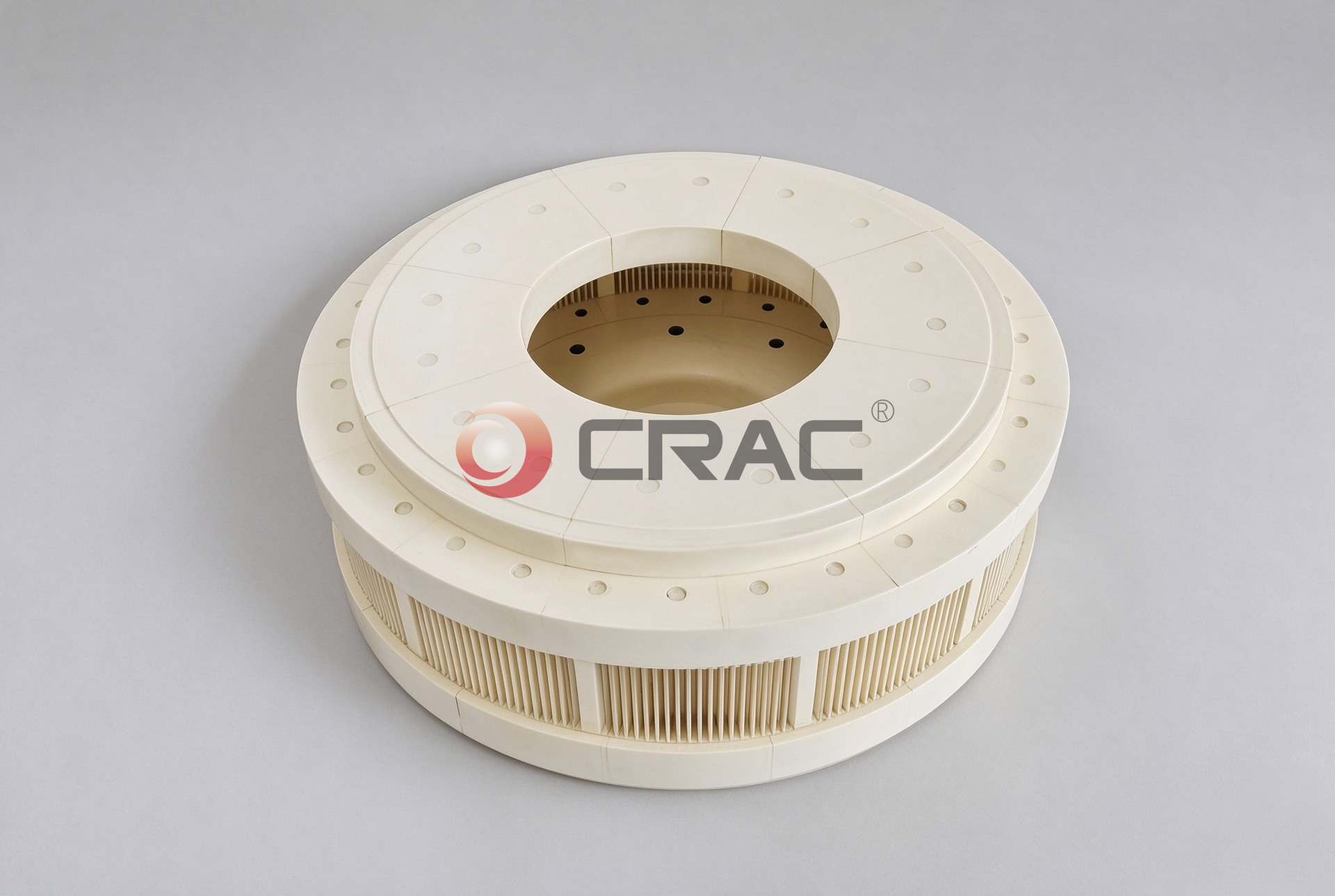
Symptom 4: Throughput Falls at the Same Speed
What you see: the fan and rotor are unchanged, but kilograms per hour drop and the recirculating load grows.
Reading it: falling throughput with stable product size usually means the air path, not the wheel — look for bag-house loading, duct fouling, or inleakage first. But if throughput falls and the product coarsens together, the wheel is telling you its gaps are worn wide: it passes coarse material freely yet drags more fines back to the mill. That combination warrants immediate inspection rather than a setpoint change.
Fast Diagnosis Table
| Pattern |
Most likely cause |
First action |
| Product coarsens, everything else normal | Blade-edge wear | Inspect edges; plan replacement |
| Setpoint creeps up over weeks | Progressive gap widening | Plot setpoint vs hours; confirm slope |
| New vibration at speed | Deposit or uneven wear | Clean, then measure blade heights |
| Throughput down, product unchanged | Air path restriction | Check filters and ducts before the wheel |
| Throughput down and product coarse | Gaps worn wide | Stop and inspect now |
If the Diagnosis Is the Wheel
When edges are round and gaps are wide, replacement is the only cure — and the replacement decision is really a material decision. Zirconia blades keep the gap they were molded with, so the cut stays where you set it; the trade-off is a higher initial cost that the stretched replacement interval usually repays. Wheels are net-shaped by ceramic injection molding, so blade count, gap width and hub detail can be matched to your classifier rather than chosen from a shelf — the OEM/ODM route starts from a drawing. Related reading: how a ceramic grading wheel sharpens powder classification, and how ceramic grinding discs and other bead-mill ceramic parts keep the rest of the circuit metal-free. Battery-grade powders add a purity argument; see high-purity zirconia components for new-energy materials.
Questions We Get on the Phone
How often should blade gaps be measured?
With abrasive feeds, check at every planned stop and log the numbers — the trend matters more than any single reading. On zirconia wheels the readings should barely move between stops.
Can we just turn the wheel up to hold the cut?
Temporarily, yes, and it is the standard stopgap. But higher speed costs fan power, narrows the flow range, and accelerates whatever wear is already present.
Does a ceramic wheel need different balancing?
No — the same dynamic-balance tolerance applies at the same speed. State the tolerance when ordering and the wheel should arrive with it verified.
We run wet classification. Same story?
Mostly — wear patterns are similar, and the corrosion resistance of zirconia adds a second reason to leave steel behind.
Send us the symptom — we will help you read the wheel.