Nobody plans to run a worn grinding disc. It happens the ordinary way: the disc still turns, the mill still pumps, the product still ships — so the replacement gets pushed to the next maintenance window, then the next. What that delay costs is rarely added up in one place. This page does the adding up, then gives you a short inspection routine for deciding when the disc truly has to come out. If you are comparing disc options in the first place, start from the CRAC ceramic grinding discs page.
The First Cost: Fineness That Will Not Hold
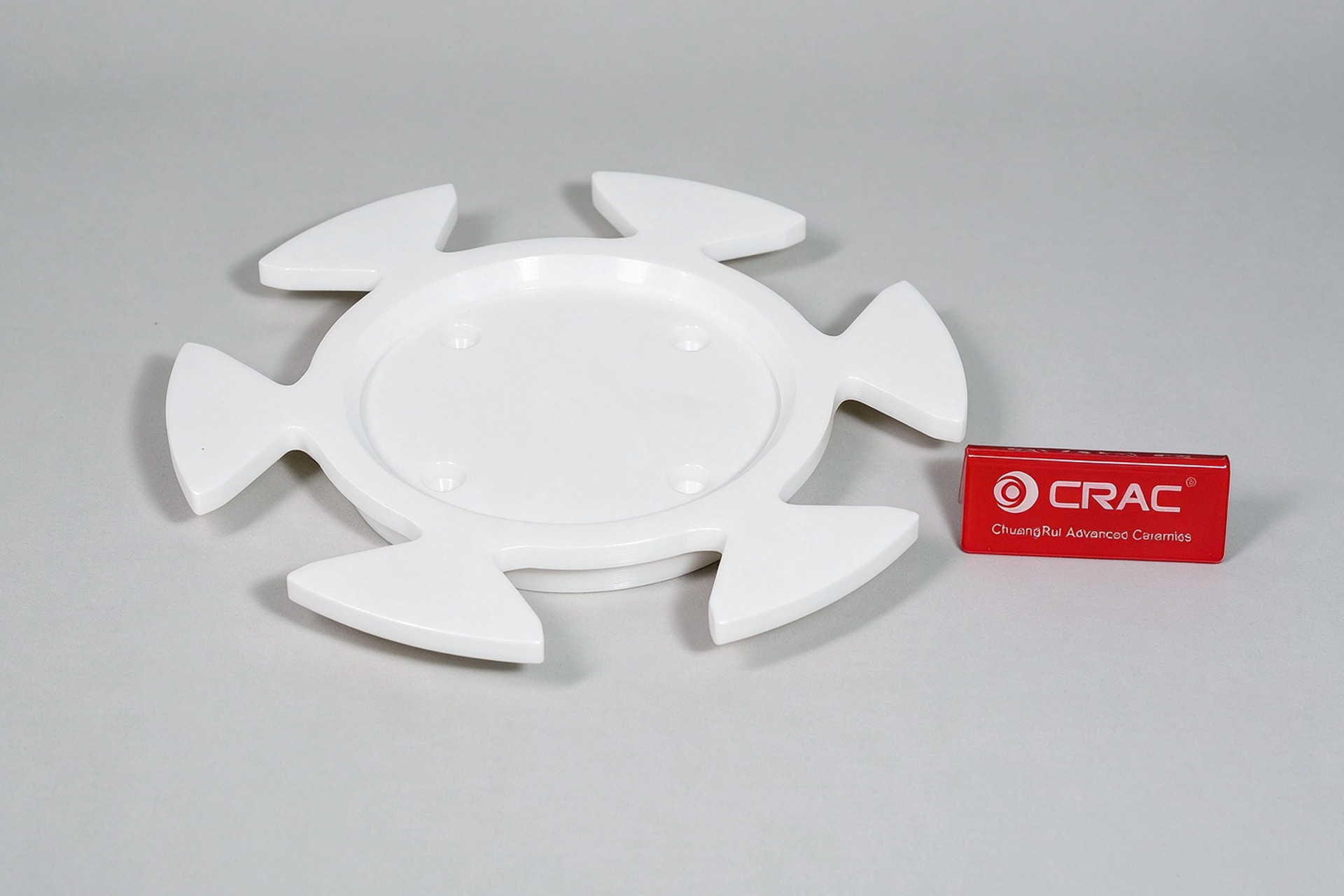
A disc does its work at its edges and surfaces — that is where energy is handed from the rotor to the beads. As those features wear round, the beads roll more than they shear, and the first casualty is the fineness curve. Operators feel it as a creeping fight: same recipe, same bead charge, same dwell, but the final particle size sits a little higher each week, and someone quietly extends the milling time to compensate. Extended milling time is not a free fix — it is throughput lost through the back door, and on temperature-sensitive slurries it also pushes the batch closer to its thermal limit.
The Second Cost: Downtime You Did Not Schedule
A planned disc change is an hour inside a maintenance window. An unplanned one is whatever the day hands you: a cracked disc found during cleaning, a shaft that will not come free because a worn hub has fretted, a weekend call-out. The accounting question to ask is not what the spare part costs, but how many unplanned stops per year the current disc policy produces — and how many of them happened because inspection kept getting deferred.
The Third Cost: Metal Where It Must Not Be
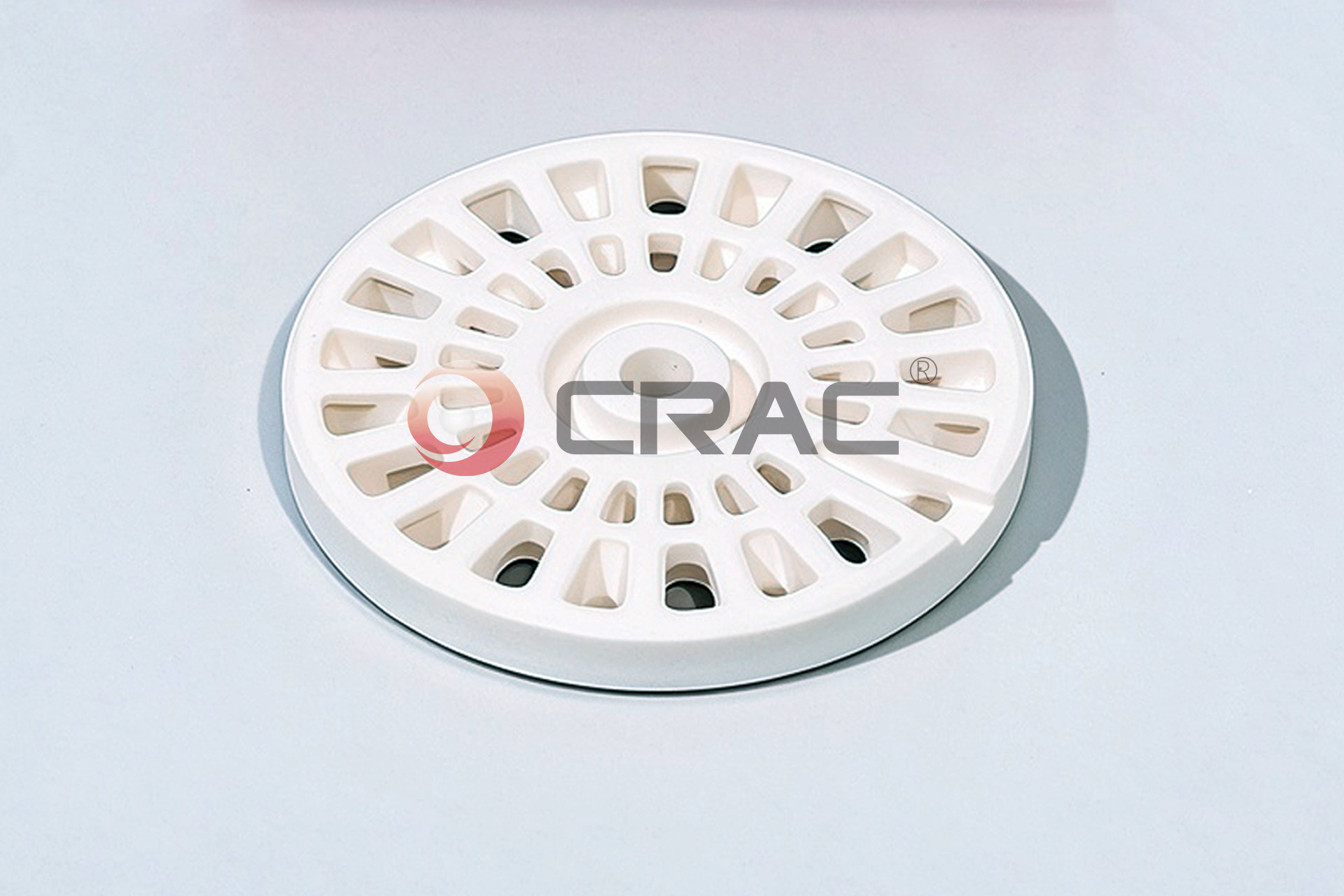
In many plants this is the decisive one. A steel disc sheds a fine, continuous dust of itself into the product — invisible in the slurry, very visible to the downstream customer. For battery cathode slurries the tolerance for metallic contamination is close to zero, and a single metal-pick-up event can cost more than a full set of ceramic discs. For pigments and inks it shows up as colour drift; for pharma as batch rejection. This is also the cost that disc material eliminates rather than reduces: zirconia is inert and adds nothing, which is why ceramic dispersion discs in lithium-battery slurry processing have become the default in that industry.
The Fourth Cost: A Mill Working Against Itself
Worn geometry wastes energy in a second, quieter way. The pumping and shearing profile the disc was designed for degrades, so the motor delivers the same kilowatts into a less effective motion of the bead bed. Plants rarely meter this directly; it appears as a slightly worse energy-per-kilogram figure in the monthly review, attributed vaguely to "the mill getting older". When the discs are replaced and the number recovers, the cause becomes obvious.
Four Checks That Turn This Into a Decision
Next time the disc is accessible, record these four numbers. They convert "looks a bit worn" into a replace-or-defer decision:
- Edge radius. Run a fingernail along the leading edge of a pin or ring. A designed edge bites; a rounded one slips. Photograph it against a scale for the trend file.
- Groove depth. Circumferential grooving from bead circulation marks the surface loss. Depth beyond the profile tolerance means the energy-transfer geometry is gone.
- Gap to the stator. Measure the running clearance at several points. An enlarged, uneven gap changes both flow and wear rate of the beads themselves.
- Product trend. Pull the last three months of fineness and contamination data. A rising dwell time or rising metal readings point back at the rotor, not the recipe.
If two or more of these are trending the wrong way, defer no further — schedule the change while it is still yours to schedule.
Stretching the Interval Instead of Watching It Shrink
The alternative to replacing more often is replacing less often, and that is a material choice. Zirconia discs keep their edge profile several times longer than hardened steel in abrasive duties, and ZTA sits between them at a friendlier price point — the trade-offs are compared in the material classification guide and the grade selection guide. Because CRAC forms discs net-shape by ceramic injection molding (the precision injection molding route covers the high-volume variant), the profile that leaves the factory is the drawing, not an approximation of it — which matters more than most buyers expect, since a third of premature "wear" complaints trace back to profile error in the original steel disc. The wider family is described under bead-mill ceramic parts, and the extreme-duty versions under zirconia structural parts for wear and corrosion.
Questions From Maintenance Planners
Our fineness is fine but the mill takes longer. Is that the disc?
Very often, yes — extended dwell with stable final size is the classic signature of a worn rotor losing shear efficiency while the beads still finish the job slowly.
Can we flip or re-machine a steel disc instead of replacing it?
Flipping is a legitimate stopgap if the geometry allows it. Re-machining restores shape but removes the hardened case, so the next interval is shorter than the first.
Does a ceramic disc change our bead choice?
Not the size you need for the product, no. It does change the economics: zirconia beads pair with zirconia discs so both sides of the contact wear slowly, instead of one destroying the other.
Can you match our existing disc's bolt pattern and diameter?
Yes — from a drawing or a scanned worn part. The OEM/ODM program exists precisely for retrofitting mills whose original rotors are no longer economic in steel. Battery-material plants can also see the dedicated new-energy components line.
Send us your disc drawing or a photo of the worn one — we will quote a like-for-like ceramic version.