A ceramic sieve earns its keep on one number: the aperture. Unlike a woven wire mesh, whose cut is the sum of many flexible wires, a ceramic sieve is a rigid plate (or cylinder) whose openings are individually defined and positioned in the mold. That rigidity is the point — the aperture does not stretch, sag or shift under load, so the cut point stays where it was specified. For fine powder classification this is what separates a reproducible grade from a drifting one. See the current range on the CRAC ceramic sieves product page.
Aperture Geometry Defines the Cut
Two things decide what passes: the aperture size and the aperture shape and edge definition. A square or round hole with a sharp, clean edge gives a well-defined top size; a ragged or rounded edge blurs the cut. The open-area ratio — the fraction of the surface that is actually open — sets the throughput: more open area passes more material at lower pressure, but weakens the skeleton and can let edges wear faster. Good sieve design is the balance between a tight cut and enough open area to move product.
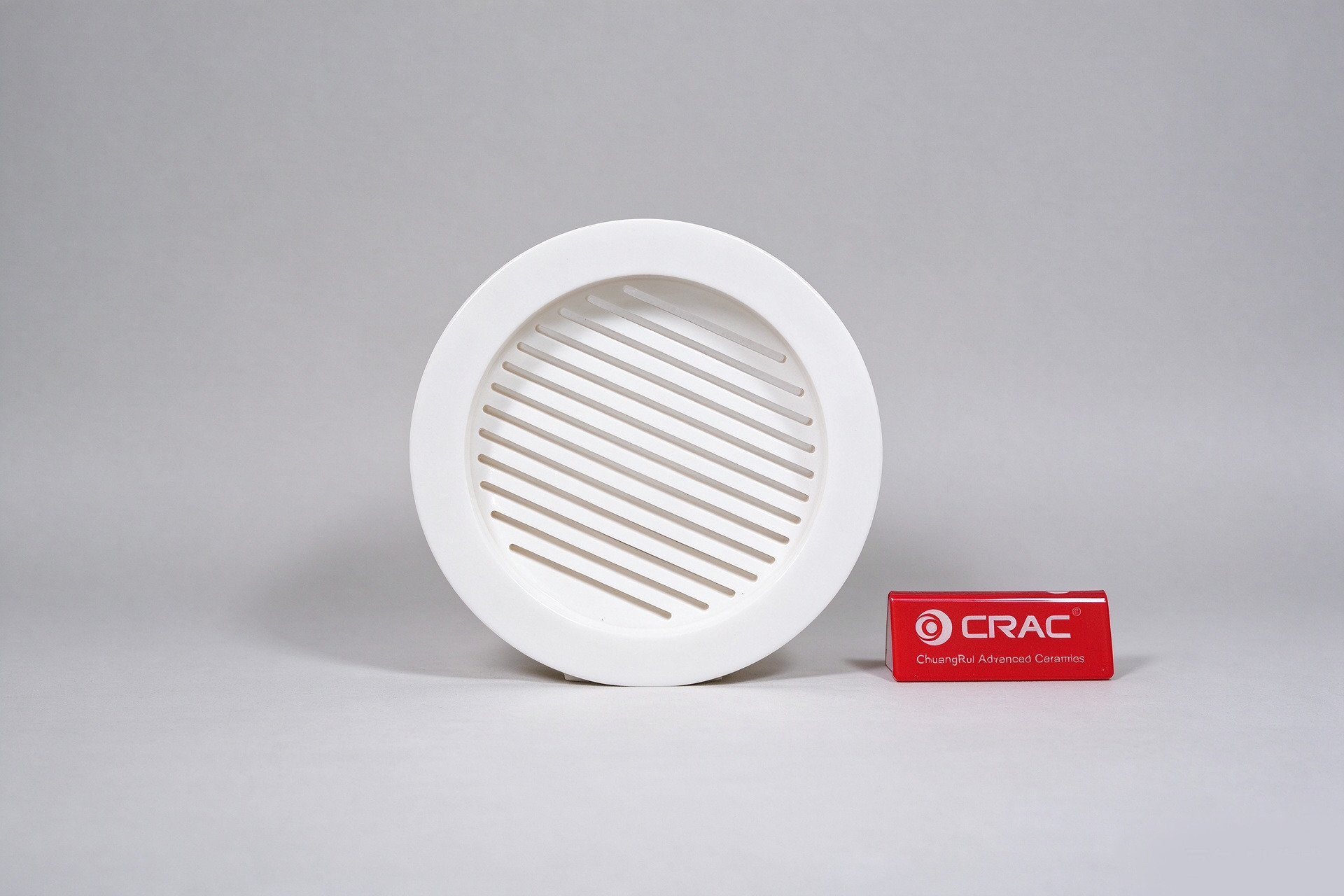
Why Aperture Edges Wear
In service the particles sliding across the openings do the damage. On a metal screen the wires abrade and the holes enlarge, so the cut coarsens over time and batches drift apart. On a ceramic sieve the edge stays sharp because the material resists that sliding wear, and because the plate is non-magnetic and non-metallic it cannot contaminate the powder with iron. For sensitive or high-value powders that combination — a stable cut plus no metallic pick-up — is usually the reason to switch.
Materials by Aperture and Duty
The material is chosen for edge durability and the chemical environment more than for the aperture itself. Family-level behaviour:
| Property |
Alumina |
Zirconia (Y-TZP) |
ZTA blend |
| Aperture tolerance | Tight, repeatable | Tight, repeatable | Tight, repeatable |
| Edge-wear life | Good | Very good | Good |
| Open-area achievable | High | Moderate | High |
| Magnetic / metallic | None | None | None |
| Best at | General, cost-effective | Fine cuts, impact, thermal shock | Balanced wear + cost |
The choice is driven by the abrasiveness of the feed and the environment; our material classification guide and zirconia selection guide cover the trade-offs.
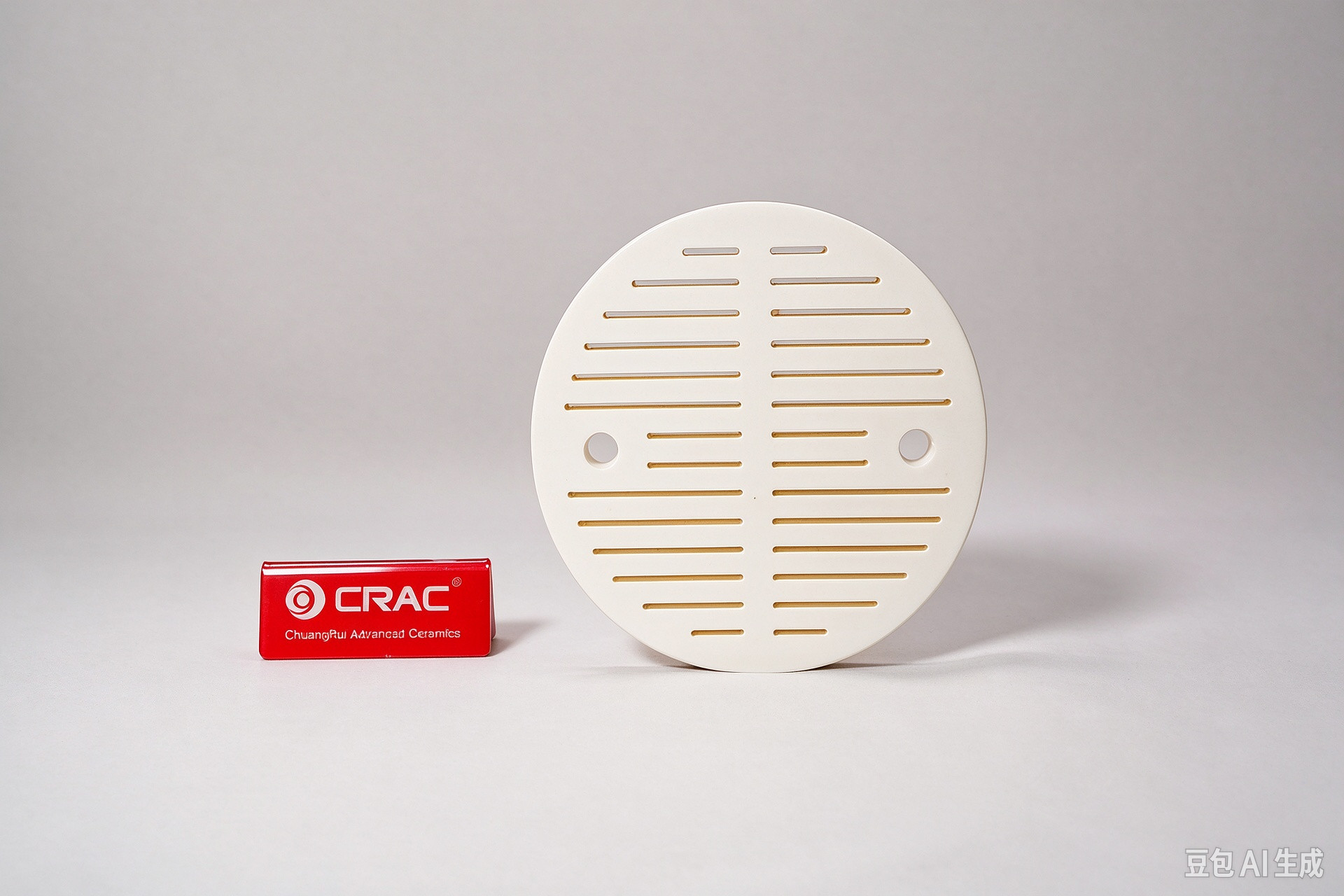
Molding Apertures, Not Punching Them
A ceramic sieve's openings are too fine and too precisely positioned to punch or etch reliably. CRAC forms them by precision ceramic injection molding, where the aperture pattern is part of the mold cavity and is reproduced in every shot. Debinding and sintering then fix the shape without the distortion a machined screen would suffer. The CIM process guide explains the steps; because the pattern is molded, aperture position is consistent across the plate and from batch to batch.
Performance You Can Specify
- Cut-point precision – sharp, defined edges give a predictable top size.
- Throughput vs open area – the open-area ratio is set to the required flow at an acceptable pressure drop.
- Anti-blinding – smooth, non-wetting ceramic surfaces resist particle build-up in the apertures.
- Batch-to-batch consistency – molded apertures repeat without re-tensioning a mesh.
- No contamination – non-magnetic, inert surfaces keep powders clean.
Forms and Where They're Used
- Powder classification – sizing and de-agglomeration of ceramic, metal and mineral powders.
- Mining and raw materials – grading abrasive granular feeds where wire screens wear quickly.
- Chemical processing – screening corrosive or reactive powders and granules.
- Pharmaceutical and food – inert, contamination-free grading of sensitive materials.
- Pigments and coatings – consistent particle-size control for colour and finish.
How to Specify a Ceramic Sieve
- Fix the cut – choose aperture size and shape for the target top size.
- Set the open area – balance throughput against edge strength.
- Match the material – pick the grade for the feed's abrasiveness and chemistry.
- Define the frame/form – plate, disc or cylinder to suit the equipment.
- Confirm calibration needs – specify whether the sieve must be traceably calibrated.
Quality and Customization
Sieves are judged at the aperture, so CRAC inspects opening size and position — typically by optical measurement — and checks the plate against the specified open-area and cut. Aperture pattern, material and overall size can all be customized; the OEM/ODM program develops bespoke patterns from a drawing. Where classification efficiency is the wider goal, the same principle applies to a ceramic grading wheel in air classification.
Frequently Asked Questions
How accurate is the aperture?
Because the pattern is molded, aperture size and position are repeatable shot to shot; the practical tolerance depends on the grade and the aperture size being requested.
Do ceramic sieves resist blinding?
The smooth, low-energy ceramic surface resists particle adhesion better than many metals, which reduces clogging in fine, sticky or cohesive powders.
Can the pattern be custom?
Yes — aperture size, shape, open-area ratio and the surrounding frame are all set by the mold and can be tailored to the equipment.
Why choose ceramic over wire mesh?
A rigid ceramic plate holds its cut under load and adds no metallic contamination, whereas a wire mesh stretches and sheds wear debris over time.
Need a sieve with a defined, stable cut point?