Most screening problems start with a purchase that made sense on price: a woven wire mesh or a punched plate, installed because it screened the material today. The trouble arrives on a longer clock. Wire stretches, apertures go oval, edges clog, and the fraction that was supposed to be separated quietly mixes. When a screen change has become a monthly routine — or when mesh replacement is corrupting an expensive powder — it is worth stepping back and comparing the three screening media on how they actually behave, not what they cost per sheet. The molded-ceramic option is profiled on the CRAC ceramic sieves page.
The Three Media Side by Side
| Criterion |
Woven wire mesh |
Perforated plate |
Molded ceramic sieve |
| Aperture accuracy | Good when new; drifts as wire stretches and deforms | Good; degrades as hole edges wear bell-mouthed | Molded to the tool; does not stretch or deform |
| Wear life in abrasive feed | Short — thin wires are the first thing abrasion finds | Moderate — thick section, but edges round off | Longest — hard, wear-resistant body throughout |
| Blinding / clogging | Common; flexible wires trap near-size particles | Less than mesh; worn edges worsen it | Low; rigid smooth-walled apertures release particles |
| Contamination | Metal slivers and wire fragments possible as it fails | Metal wear debris over time | None — inert, non-magnetic ceramic |
| Cleaning / washdown | Mesh traps residue at every crossing | Reasonable | Excellent — smooth, cleanable, corrosion-proof |
| Initial cost | Lowest | Low to moderate | Highest |
| Best duty | Gentle feeds, frequent changes acceptable | Coarser cuts, moderate abrasion | Abrasive, corrosive or purity-critical screening |
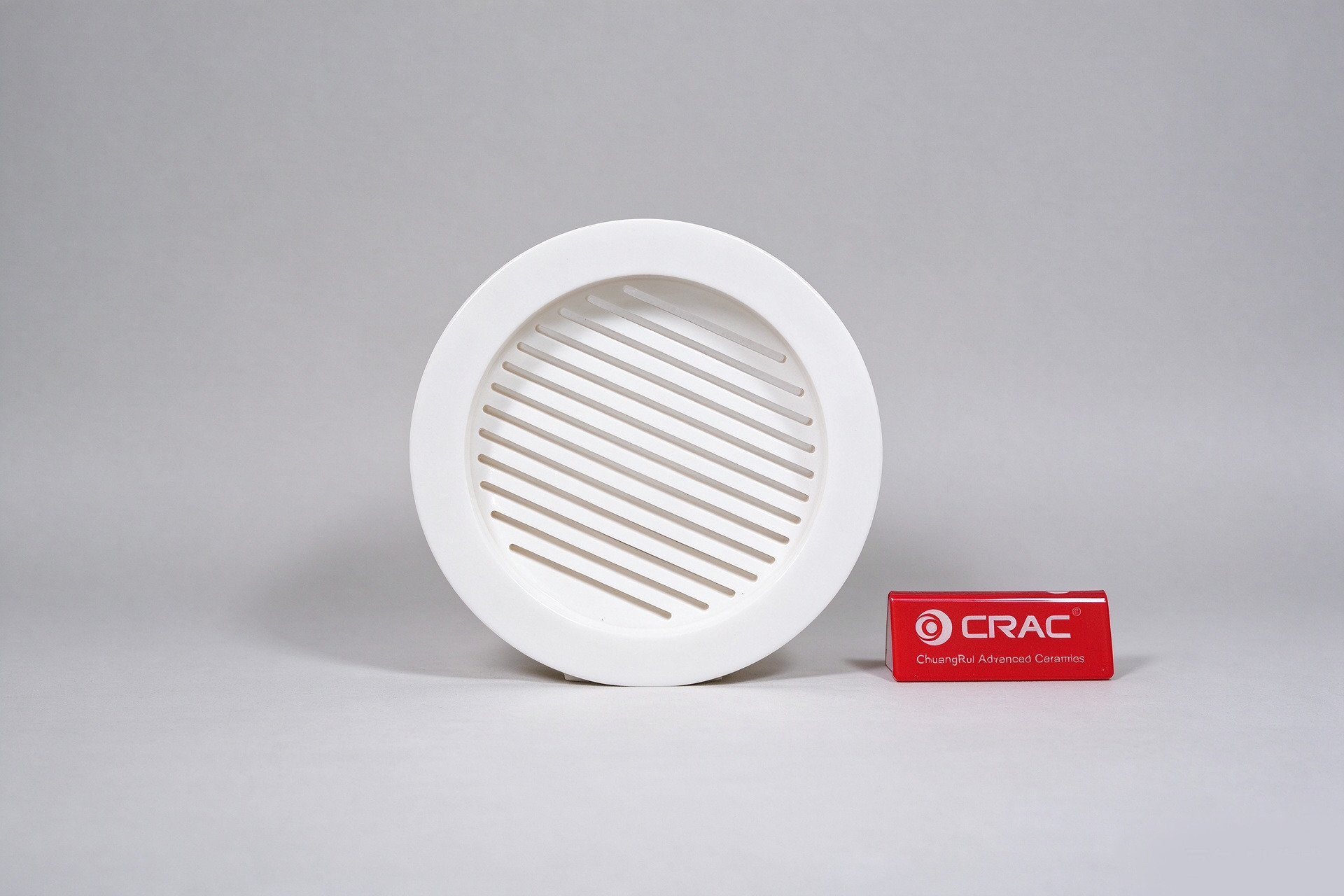
How Each One Fails
Woven mesh fails by deformation. Every particle impact works the wire; over weeks the apertures stretch oval and the nominal cut exists only on the datasheet. Because the change is gradual, quality drifts before anyone calls it a failure — the most dangerous failure mode of the three, because it hides inside "normal" variation.
Perforated plate fails by erosion. The thick section resists, but particle flow bell-mouths each hole's edge, and the effective opening grows. Plate also announces the end more honestly: throughput and cut change noticeably once edge wear is advanced.
Molded ceramic fails rarely, and loudly. The aperture walls do not erode in service, so performance holds until the piece is physically damaged — which is why the acceptance test matters more than the wear watch. A correctly specified and inspected ceramic sieve is either good or broken; it does not spend months quietly lying about its cut.
Where the Ceramic Sieve Earns Its Keep
Three situations tilt the economics decisively. Abrasive feeds that eat metal media — if the current screen survives weeks rather than months, the ceramic version's longer life usually wins within the first year. Purity-critical products — battery powders, pharma excipients, food-grade minerals — where any metal sliver from a failing mesh is a batch risk; the same logic drives high-purity zirconia components in new-energy processing. Corrosive environments — wet screening of reactive powders destroys wire quickly, while sintered ceramics shrug it off, as covered in wear and corrosion environments.
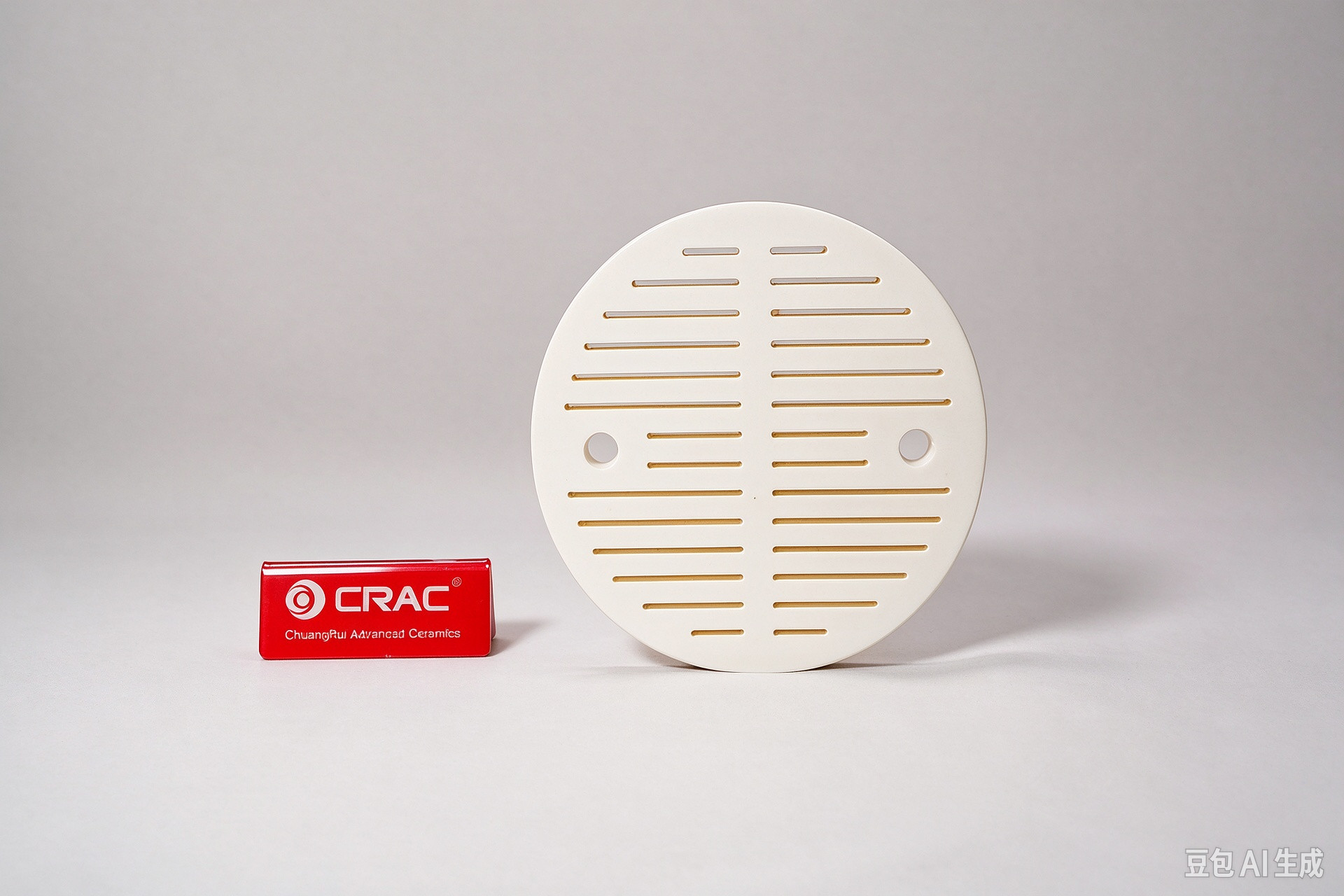
Specifying a Molded Ceramic Sieve Without Guesswork
Four inputs define the part, in this order of importance:
- The cut, not the catalog. State the top size you need separated; aperture size and shape follow from that, together with the open-area ratio your flow requires.
- The form. Plate, disc or cylinder — match it to how the sieve mounts and how powder reaches it.
- The acceptance criteria. Ask for aperture size and position verified optically, and the open area measured against specification. This is the check that makes the "molded to tool" claim verifiable.
- The grade. Zirconia where maximum edge hardness matters; the material guide and selection guide cover the alternatives.
Because the aperture array is molded — net-shape, by ceramic injection molding — a custom pattern costs a tool, not a machining program. That makes bespoke aperture layouts realistic even at moderate volumes; the precision injection molding page outlines the production route, and the OEM/ODM program takes a drawing from first article to supply. For the air-classification side of the same problem, see the ceramic grading wheel; for general engineering context, zirconia structural parts.
Practical Questions
How fine can a molded ceramic aperture go?
Below roughly a fraction of a millimeter, molding gives way to other techniques; the practical window for molded sieves is typically from sub-millimeter apertures up to coarse plate-sized openings. Tell us the cut and we will say honestly whether molding is the right route.
Does the smooth surface really reduce blinding?
Yes — near-size particles jam on rough or flexible edges. A rigid, polished, straight-walled aperture either passes them or rejects them; it does not grip them.
What about impact damage during installation?
This is the one real risk. Ceramics are hard but brittle; follow the supplied mounting guidance, avoid point impacts, and inspect after the first run.
Can we trial one plate before converting a screen deck?
That is the right way to buy it — one position, measured against the incumbent for a full wear cycle.
Tell us the cut and the feed — we will tell you whether ceramic is worth it.