"Six to ten weeks" is the answer most buyers get when they ask for a delivery date on a custom ceramic part. It sounds like padding. It is not, but it is also not a single waiting period that a supplier could shorten by trying harder. It is a chain of steps where several have a fixed physical duration, one or two depend on a decision the buyer has not made yet, and the rest are queue time.
Once the chain is written out as a calendar, the useful question changes. Instead of asking the supplier to be faster, you can see which weeks are yours to influence and which belong to a furnace. This article lays the chain out week by week, marks what can and cannot be compressed, and lists the three delays that account for most slipped dates.
The Sequence, In the Order It Actually Happens
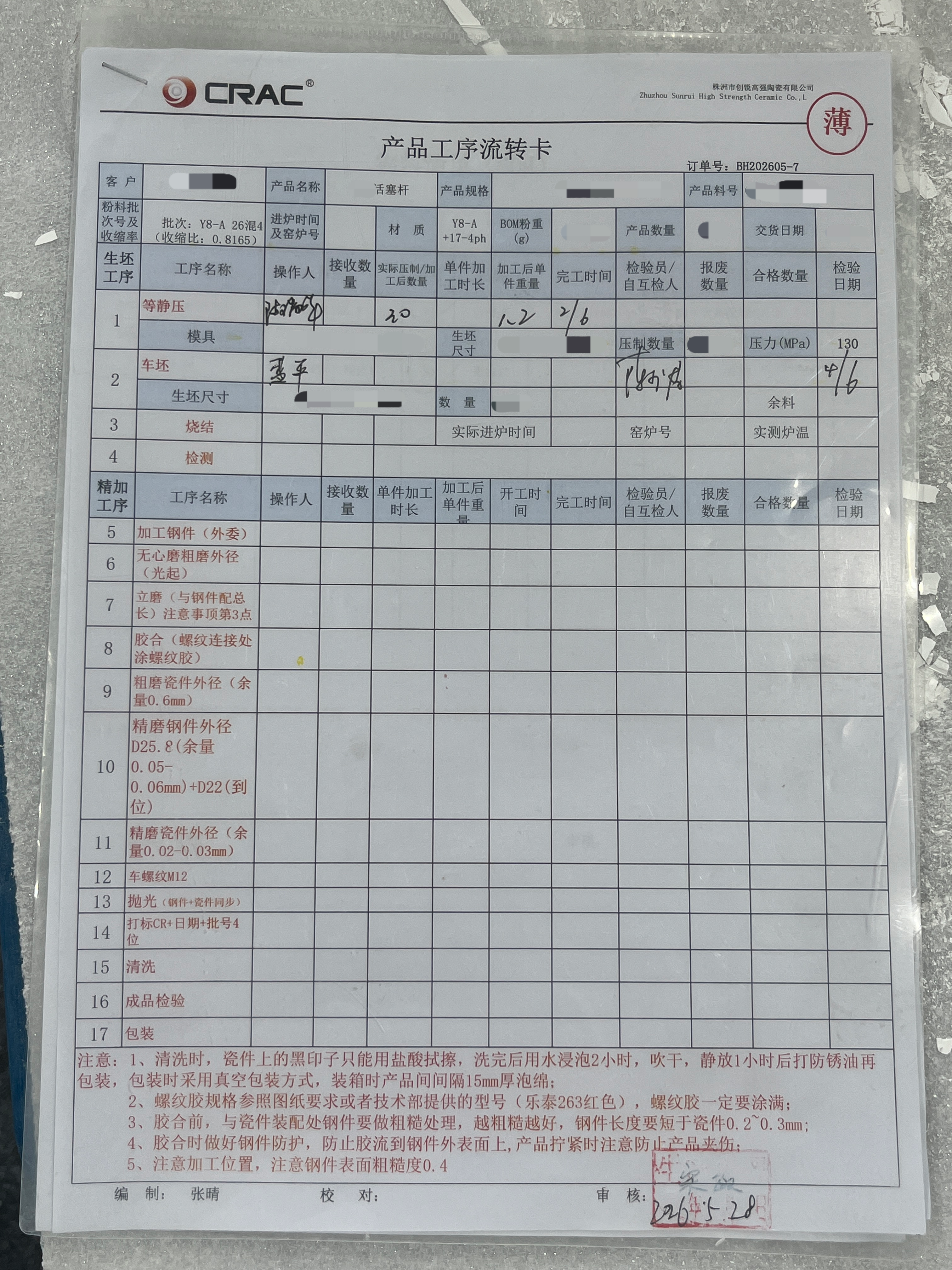
A custom ceramic order does not begin with production. It begins with a drawing being agreed, and that first step is the one most often left out of the buyer's schedule. The table below is a typical sequence for a moulded, ground part; a part machined from a sintered blank skips the tool but keeps the sintering and grinding.
| Step |
What has to be finished |
Compressible? |
Who controls it |
| 1. Drawing and route review | Geometry, tolerances, grade, quantity and inspection scope frozen | Yes — the most compressible step in the whole chain | Mainly the buyer |
| 2. Tool design and manufacture | Cavity layout, gate and ejection designed, tool cut and tried | Partly — a simple cavity is quicker, revisions are not | Supplier, gated by step 1 |
| 3. Feedstock and trial moulding | Grade and lot allocated, first articles moulded | Partly — runs in parallel with the tail of step 2 | Supplier |
| 4. Debinding | Binder removed without blistering or cracking | No — set by section thickness and binder chemistry | Physics |
| 5. Sintering | Full thermal cycle: ramp, soak, controlled cool | No — the curve cannot be rushed | Physics |
| 6. Diamond grinding | Each tight face ground in its own setup, measured between passes | Partly — more machines, but not fewer setups per face | Supplier, gated by drawing |
| 7. Inspection and release | Dimensional report, property checks, sampling, packing | Partly — but never by reducing the agreed scope | Supplier |
The important thing about this table is the last column. Only two rows are fixed by physics; five are influenced by decisions. A delivery date is mostly a scheduling problem with a hard floor in the middle.
The Two Weeks Nobody Can Take Out
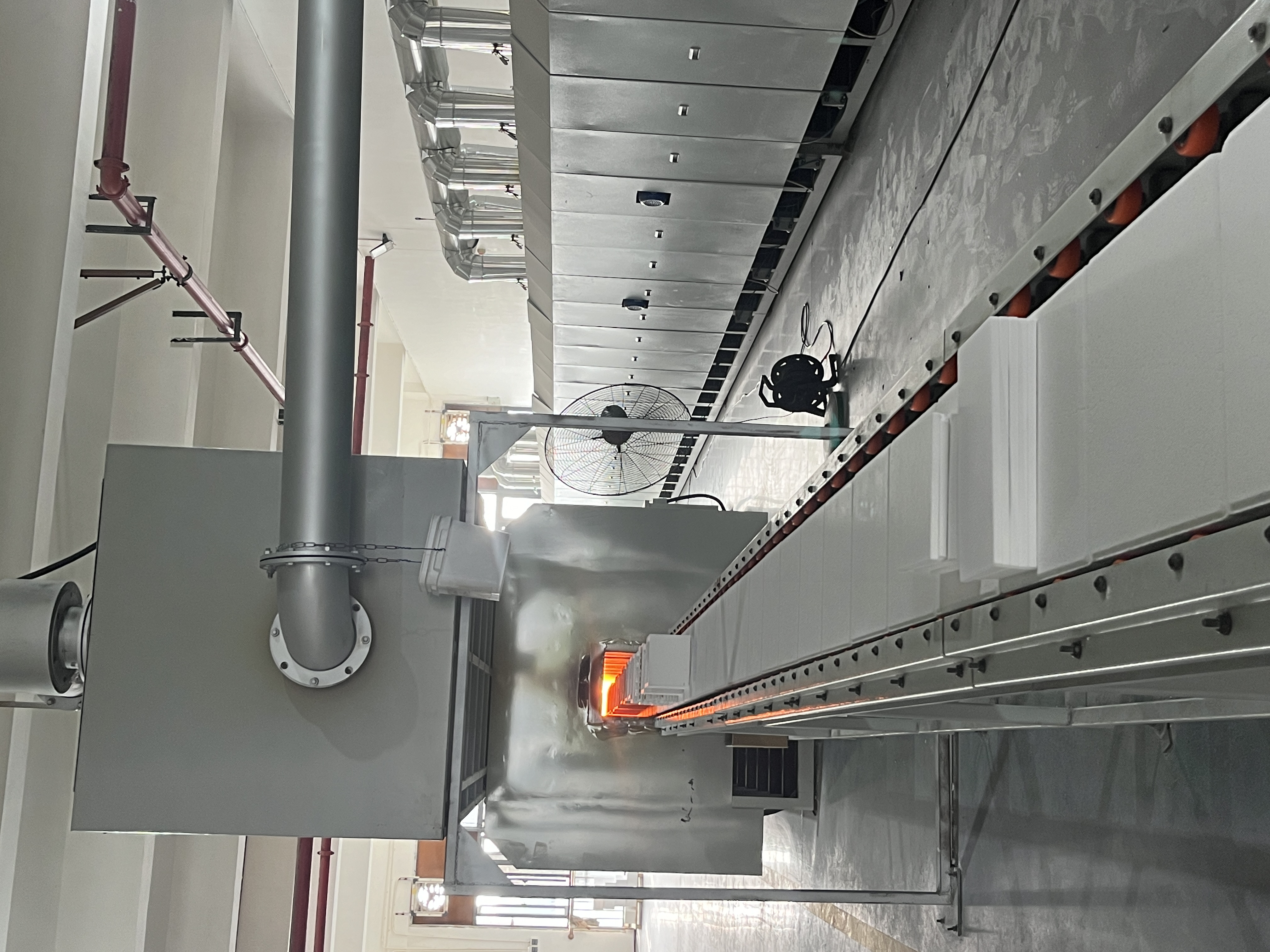
Debinding and sintering are thermal processes with a rate limit, not machine operations with a cycle time. Binder has to leave the part through a still-porous body; heat it faster and the internal pressure blisters or splits the green part, and the damage is only visible after sintering. Thick sections make this longer, not shorter. Sintering then has a ramp, a soak long enough to densify the whole load, and a controlled cool — roughly twenty percent linear shrinkage happens here, and uneven heating is what produces warped or internally stressed parts.
Put bluntly: a supplier who promises to "speed up the furnace" is either quoting a smaller load or accepting a higher scrap rate. Ask instead how many furnaces are available and how loads are scheduled. The factory technology overview describes the equipment behind these steps, and the raw-material-to-final-inspection walkthrough shows how the stages connect. The CIM manufacturing guide explains why debinding rate is tied to wall thickness.
The Critical Path Is Not the Sum of the Rows
Some steps overlap. Feedstock preparation can begin while the tool is being finished. Powder can be allocated before the cavity is cut. A supplier with several furnaces can run a trial load alongside production. So the calendar is not seven rows added together; it is the longest dependent chain, and any step that sits off that chain can move without moving the date.
What sits firmly on the critical path for almost every moulded order is: drawing frozen → tool cut → trial moulded → debound → sintered → ground → inspected. Anything that delays the first item delays everything after it. That is why a two-week delay in approving a drawing costs exactly two weeks of delivery, while adding a second grinding machine may cost nothing at all on the date.
Where Slipped Dates Actually Come From
Three causes account for most of them, and none is a slow furnace.
The drawing was not frozen. A tolerance clarified after the tool is cut means a cavity modification, and a modification means a new trial. This is the single most expensive delay, and it is entirely avoidable. Settling which faces are tight before the tool is designed is worth more than any expediting fee; it is the same discipline described in the drawing-based custom part route and in work on micron-level moulded parts.
The first article failed. A first article that warps, cracks on debinding or will not clean up to tolerance triggers a process adjustment and a repeat of steps 3 to 6. That is a full second pass through the fixed-duration steps. Ask whether the quoted date includes a first-article allowance, and whether the price holds if the first run needs adjustment.
The order joined a queue. Grinding and inspection capacity is shared across orders. A date quoted without a production slot is an estimate. Ask when the part is scheduled to enter grinding, not just when the order was accepted. Suppliers running an OEM and ODM programme will usually give a milestone list rather than a single date, which is the more useful answer.
A Milestone List Worth Asking For
Instead of one delivery date, ask for five dates: drawing approved, tool complete, first article shipped, first article approved, production released. Each is a decision point where you can still act. If the tool-complete date slips, you know immediately that the delivery date has moved, rather than finding out in week nine. If a supplier cannot produce these five dates, the six-to-ten-week figure was a guess.
Also ask what the quality control release step includes, because inspection scope is a common hidden week. A lot requiring measured dimensional reports, density and hardness checks, and a signed release pack takes longer than one released on a visual check — and the difference should have been agreed when the order was placed, not discovered at despatch. For complex geometries the volume-production discussion is a useful reference for what the ramp from trial to production involves.
When a Shorter Date Is Legitimate
There are real ways to pull a date forward. Choose a machining route from a sintered blank for a small quantity and skip the tool entirely. Freeze the drawing and the grade before requesting the quote. Reduce the number of tight faces. Accept a trial batch before the production run. Order the tool and the trial quantity as one decision. What does not work is compressing the furnace, cutting the inspection scope after the fact, or approving a drawing in stages.
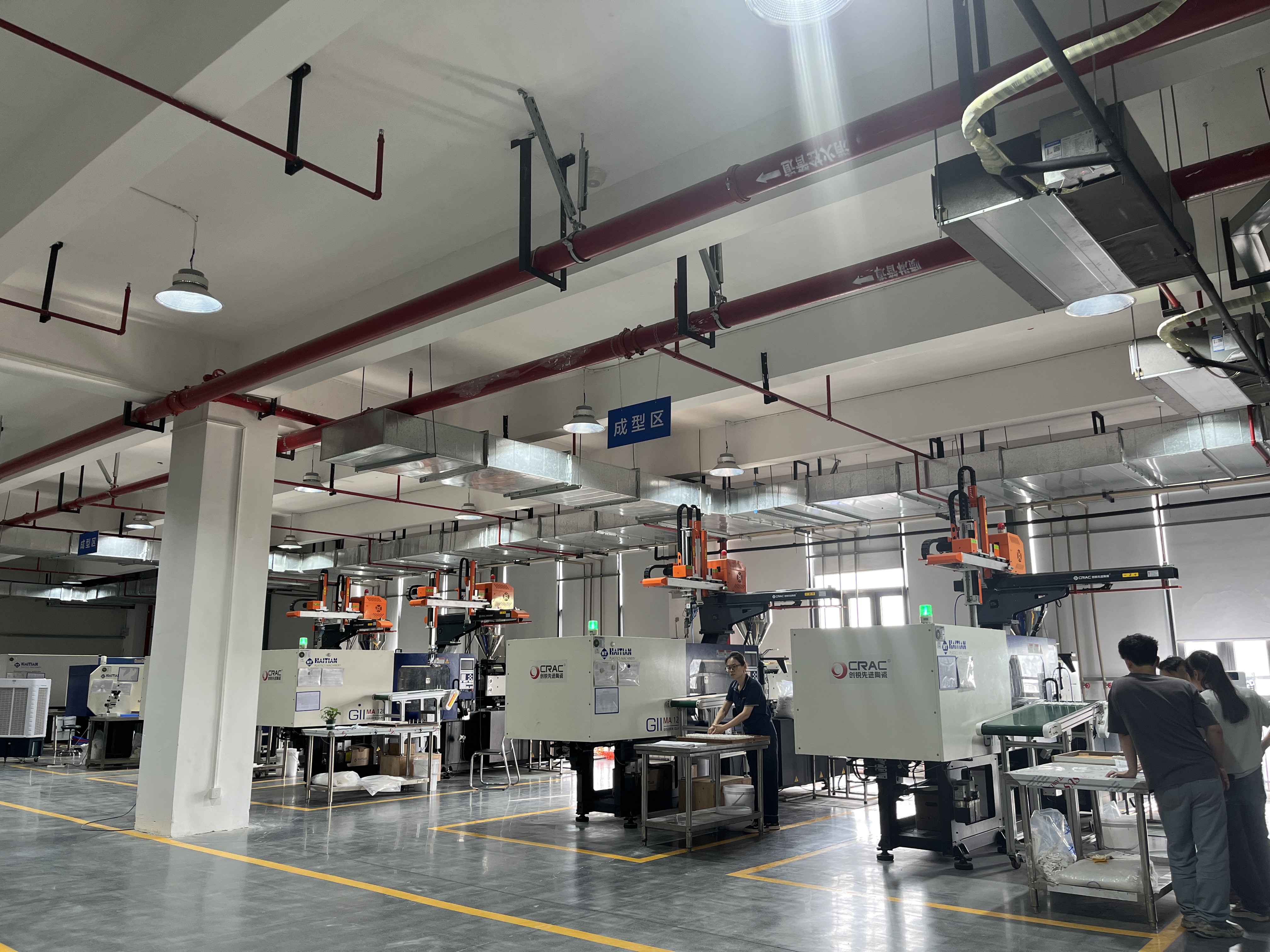
The factory selection guide is worth reading in this context: a supplier who can show furnace capacity, in-house grinding and its own inspection room controls more of the calendar than one who subcontracts two of them. On custom ceramic parts, the shortest reliable delivery date almost always comes from a complete drawing and a supplier that owns the whole chain.
Ask for Milestones, Not One Date
Send the frozen drawing, the grade and the quantity. We can then give you the five dates that make up the delivery schedule and show which steps are fixed.
Custom Ceramic Parts
Request a Schedule